Metal roof vs shingle for Florida wind
For Florida wind, compare how shingle, tile, and metal systems attach to your roof before choosing a material. In a metal roof vs shingle decision, the condition that matters most is the full system: roof slope, deck, underlayment, fasteners, attachment, and details at walls, vents, and edges.
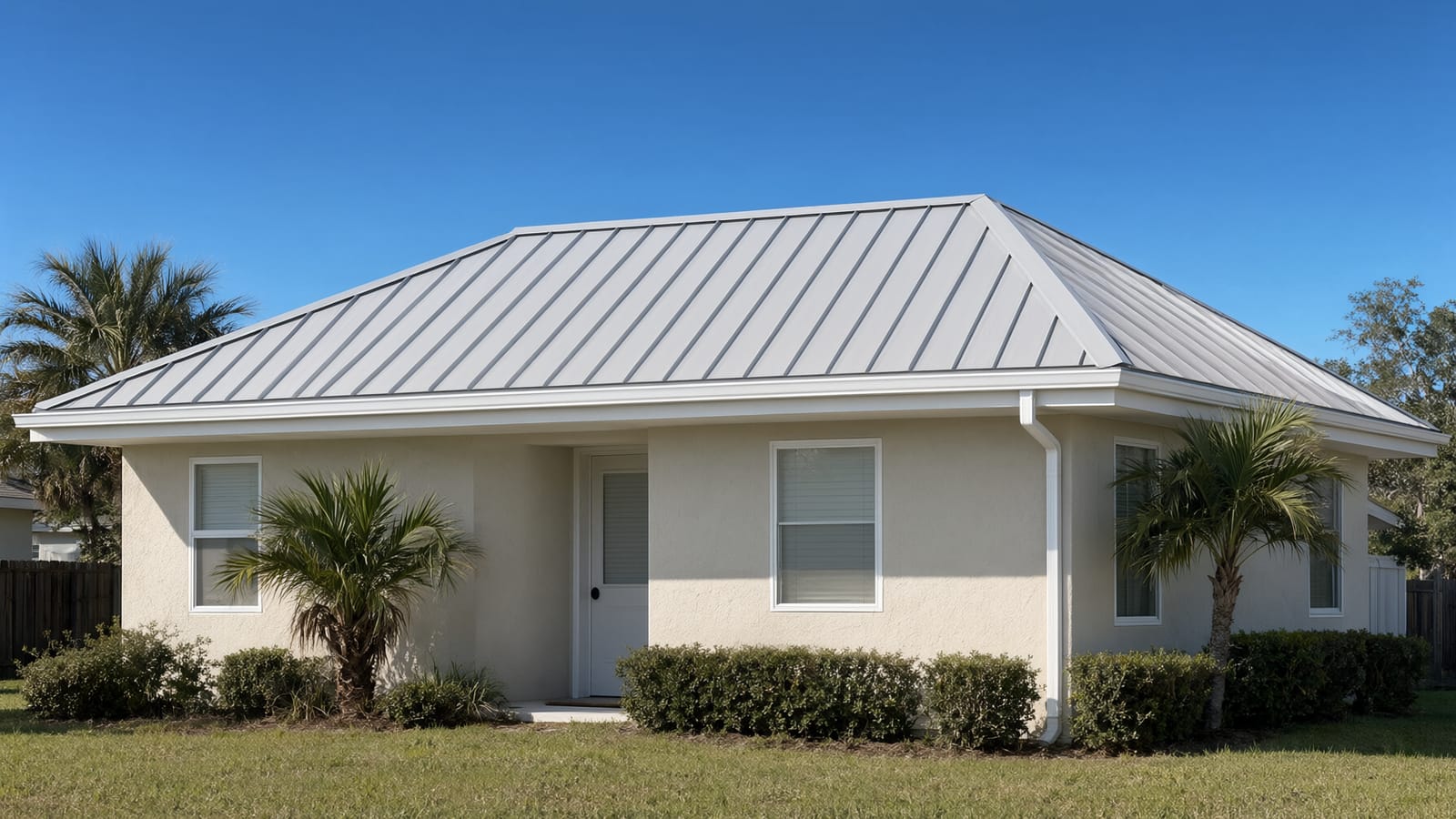
Florida homeowners replacing a roof often compare shingle, tile and metal with wind in mind. The Atlantic hurricane season runs from June 1 to November 30, so material choices can be part of a careful plan for a dry, sound home.1
Florida roof wind details: what matters?
Start with the proposed wind rating.
The Florida Division of Emergency Management says to choose shingles rated at or above your area’s design wind speed.2 Ask the roofing company to explain the proposed shingle’s wind rating, how it relates to conditions at your home, and which underlayment, fasteners, and edge details accompany the proposed system.
Roof slope belongs in that conversation too. NRCA does not recommend asphalt shingles on slopes under 18 degrees.3 If part of your roof has a low slope, ask whether the proposed system is intended for that area.
FEMA says to use nails, not staples, in high-wind areas.4 For homes within 3,000 feet of saltwater, FEMA says to use stainless steel nails.4
Useful questions for a shingle proposal include:
- What wind rating does this shingle have for my area?
- Will you use nails rather than staples?
- What nail type is proposed for my home’s location?
- Is every roof slope suited to the shingle system?
- What underlayment and edge details are included?
How should tile attach?
Tile attachment needs close attention in Florida. FEMA says tile roofs are very vulnerable to windborne debris, and mortar-set tile is much more damage-prone than other attachment methods.5
Ask how the company plans to attach the tile and how the design addresses areas where debris may strike the roof.
A change to tile can bring another issue. Switching from shingles to tile may require a review of the structure because of the added weight.2 Ask whether your home needs that check before you choose a tile system.
Questions for a tile discussion include:
- What attachment method is proposed for the tile?
- How does the proposal address windborne debris?
- Is mortar part of the proposed attachment method?
- Does changing from shingles to tile call for a review of the home’s structure?
- What work is planned beneath the tile?
Which is better in Florida: a shingle or metal roof?
A material name alone does not explain the slope, deck, underlayment, fasteners or attachment method in a proposal.
Look below the visible roof surface first.
A metal roof is roofing with a visible metal surface over other roof layers.6 Most home metal roofs sit on a plywood or OSB deck.6
FDEM suggests an improved underlayment beneath metal roofs.6 Ask what underlayment is proposed and how it works with the rest of the system, then ask what the company will review before installation.
Ask the company how its proposal handles the connection between the metal roof, underlayment and deck.
Consider asking:
- What type of deck is under my current roof?
- What underlayment do you propose beneath the metal?
- How will the metal be attached?
- What details are proposed around roof edges and openings?
How long can roofing materials last?
There is no one lifespan figure.
NRCA says most new roofs are designed for about 20 years of useful service.3 Slate, clay tile and certain metals can last longer.3
That statement does not settle which material belongs on your home, and it does not provide a lifespan figure for each material. Per-material lifespan figures are not given here because no reliable source was found.
A material name alone does not explain the slope, deck, underlayment, fasteners or attachment method in a proposal.
What should I ask if none of these materials fits?
Bring the same questions to each roofing company you consider, and write down the answers alongside each proposal after you ask about wind rating, fasteners, underlayment, attachment, edges, openings, transitions, slope, material changes, and the deck.
- What wind rating is proposed for this roof system?
- What fasteners will be used, and where?
- What underlayment is proposed beneath the material?
- How will the material attach to the roof?
- What is planned for roof edges, openings and transitions?
- Does my roof slope affect the proposed material?
- If I am changing materials, must the home’s structure be checked?
- What work is proposed for the deck beneath the roof?
FAQ
Does my roof slope rule out asphalt shingles?
NRCA does not recommend asphalt shingles on slopes under 18 degrees.3 Ask whether a low-slope section calls for a system intended for that area.
Should shingles use staples or nails?
FEMA says to use nails, not staples, in high-wind areas.4 FEMA says homes within 3,000 feet of saltwater should use stainless steel nails.4
Does tile require a structural check?
FDEM says switching from shingles to tile may need a structural check for the added weight.2 Ask about it first.
What sits beneath a metal roof?
Most home installations have a plywood or OSB deck beneath the metal covering.6 FDEM suggests improved underlayment beneath that covering.6
How Howe.to can help
You answer a few questions and see the named roofing companies available for your area. You choose which companies may contact you about roofing. Howe.to is not a contractor.